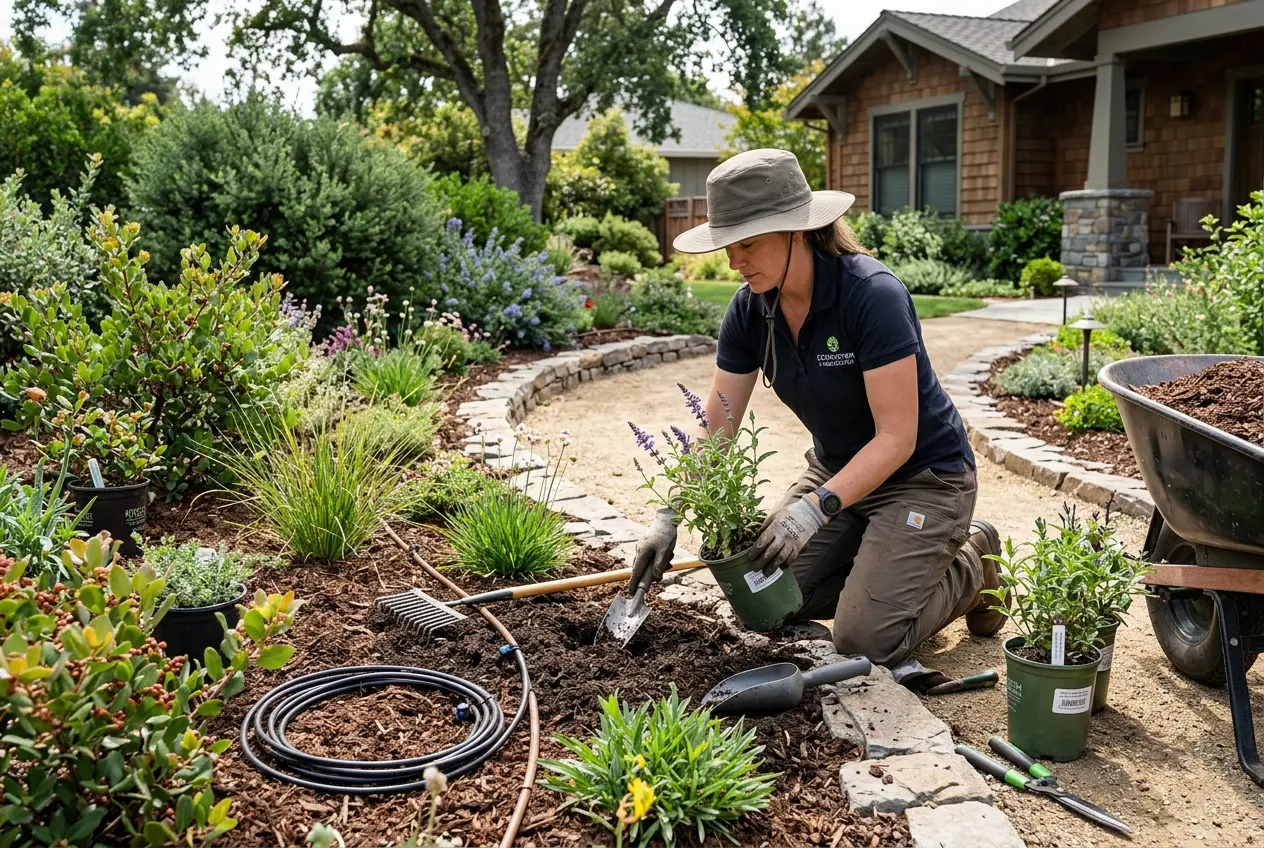
Chapel Hill and Durham homeowners increasingly seek landscapes that support bees, butterflies, and hummingbirds. Our designs use NC-native plants like purple coneflower and beardtongue that thrive in Piedmont clay with minimal irrigation. We cluster plants by water needs, creating micro-zones that prevent overwatering drought-tolerant species.
For properties near the Museum Park or Umstead Park, we incorporate deer-resistant varieties and strategic brush piles that shelter songbirds. Maintenance programs focus on selective hand-weeding to preserve self-seeding annuals, with organic pest controls that won't harm pollinators. All designs include winter interest elements like evergreen mountain mint and berry-producing shrubs.
For properties near the Museum Park or Umstead Park, we incorporate deer-resistant varieties and strategic brush piles that shelter songbirds. Maintenance programs focus on selective hand-weeding to preserve self-seeding annuals, with organic pest controls that won't harm pollinators. All designs include winter interest elements like evergreen mountain mint and berry-producing shrubs.
Our Process
- 01 Step 1: Site analysis of sun patterns and drainage
- 02 Step 2: Custom plant palette selection
- 03 Step 3: Soil preparation with mycorrhizal inoculants
- 04 Step 4: Installation with proper spacing for maturity
Benefits
- 50% less watering than traditional beds
- Eliminate need for chemical pesticides
- Year-round visual interest
- Support local migratory species
Frequently Asked Questions
Will native plants survive under my oak trees?
Yes - we use understory species like wild ginger and Christmas fern adapted to dry shade.
How do I prevent rabbits from eating everything?
We install discreet rabbit fencing for vulnerable young plants until established.