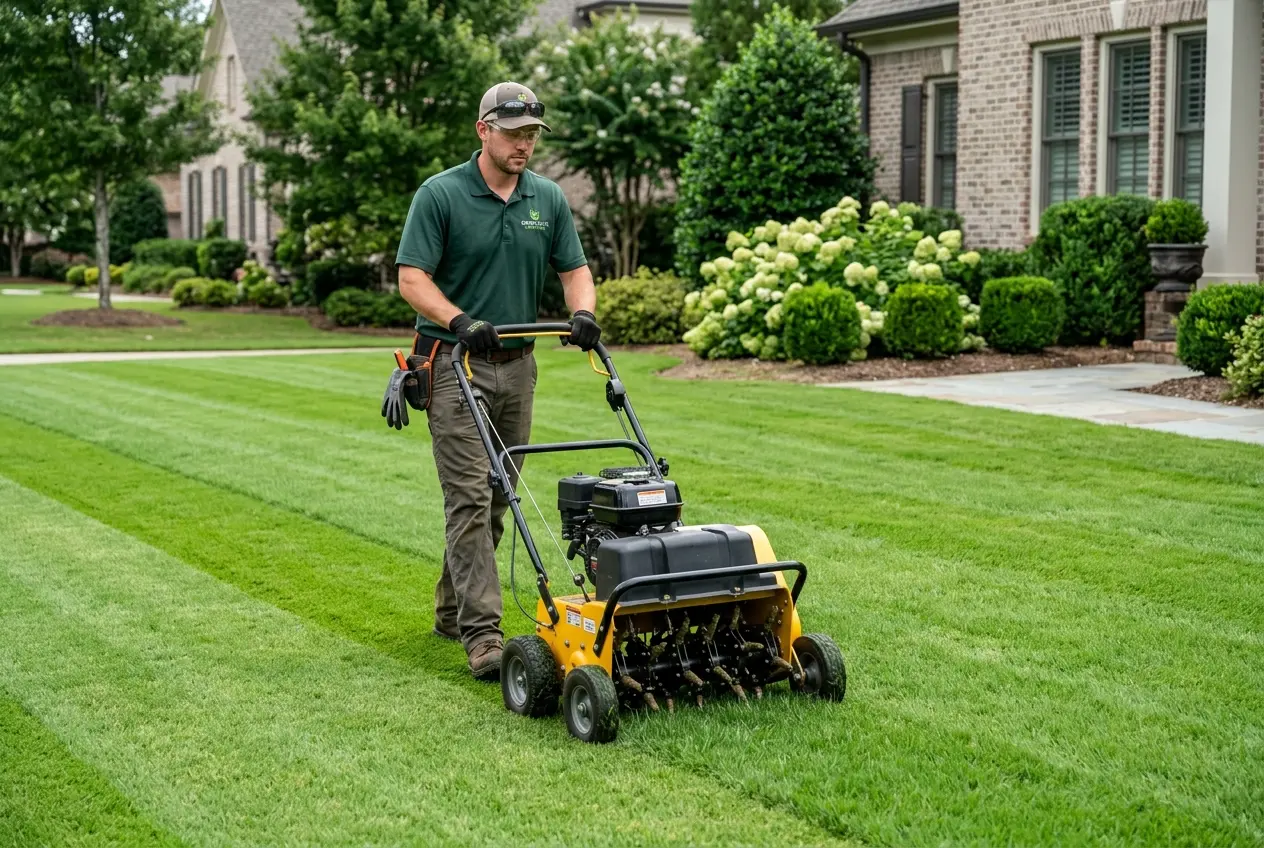
Bermuda grass thrives in Raleigh's summer heat but requires precise timing for spring green-up and fall dormancy. Our monthly service includes targeted pre-emergent applications timed to NC State's growing degree day models, preventing crabgrass without harming your turf. For zoysia lawns common in Morrisville's newer developments, we use low-nitrogen fertilizers that prevent thatch buildup while encouraging deep roots.
Unlike generic national programs, we adjust mowing heights seasonally - cutting Bermuda at 1.5" during peak growth but raising to 2" during August droughts. All clippings are processed through our specialized mowers that mulch finely enough to decompose rapidly, eliminating the need for bagging in most cases.
Unlike generic national programs, we adjust mowing heights seasonally - cutting Bermuda at 1.5" during peak growth but raising to 2" during August droughts. All clippings are processed through our specialized mowers that mulch finely enough to decompose rapidly, eliminating the need for bagging in most cases.
Our Process
- 01 Step 1: Dormant pre-emergent application in early March
- 02 Step 2: First mow at 50% green-up with sharpened reels
- 03 Step 3: Monthly liquid fertilizers with micronutrients
- 04 Step 4: Fall potassium boost for winter hardiness
Benefits
- Eliminate spring dead spot fungus
- Reduce water needs with deeper roots
- Prevent scalping on uneven terrain
- Maintain green color longer in fall
Frequently Asked Questions
Why does my Bermuda thin out near pine trees?
Pine straw raises soil acidity - we apply targeted lime treatments and switch to shade-tolerant varieties in these zones.
When should I transition from Bermuda to fescue?
We recommend cool-season blends only for shaded ITB properties - Bermuda outperforms in 90% of Raleigh lawns.